

Beauty and the Beast is one of those stories that refuses to fade quietly into the background. It lingers, reshapes itself, and reappears in new forms every few decades, as if daring each generation to try and improve on it. Cinema, naturally, has taken that challenge personally, producing a long line of adaptations that range from hauntingly poetic to aggressively marketable.

The tale originates with Gabrielle-Suzanne Barbot de Villeneuve’s 1740 version, a sprawling and far more intricate narrative than the simplified versions most people know today. At its core, the story taps into something uncomfortably universal: the tension between appearance and reality, fear and empathy, and the slow, reluctant process of understanding another being. It has endured because it speaks to transformation, both literal and emotional, and because it offers a strange kind of hope that love can exist beyond surface-level attraction. That idea, naive as it can sometimes seem, is apparently too compelling for storytellers to leave alone.
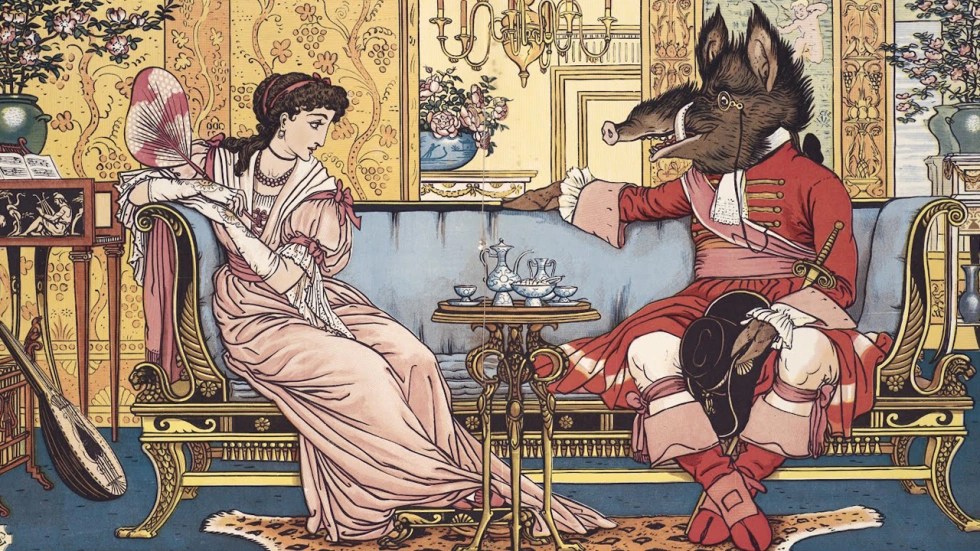
 La Belle et la Bête (1740)
One of the most visually striking adaptations arrived in 1946 with Jean Cocteau’s La Belle et la Bête, a surrealist romantic fantasy that treats the story less like a fairy tale and more like a waking dream. Cocteau’s film leans into atmosphere and symbolism, with living statues, drifting curtains, and a Beast who is as tragic as he is frightening. It’s less concerned with narrative efficiency and more interested in mood, which makes it feel timeless in a way many later versions struggle to achieve.

Then, decades later, Disney stepped in with its 1991 animated feature, sanding down the darker edges and packaging the story into something bright, musical, and emotionally direct. This version became the cultural default, turning Belle into a modern heroine and the Beast into a misunderstood romantic lead, all while surrounding them with singing furniture that somehow made the premise more, not less, acceptable.

Over the years, adaptations have continued to multiply, from live-action remakes to modernized retellings that swap castles for high schools or cursed princes for emotionally unavailable billionaires. Each version tweaks the formula, but the skeleton remains the same: isolation, fear, connection, and eventual transformation. It’s a narrative blueprint that filmmakers keep returning to, partly because it’s flexible, and partly because audiences keep showing up, ready to believe in it again.

If you’re curious to see how wildly this story can shift in tone, style, and intent, consider clicking on the posters or links below to explore these cinematic interpretations in greater detail. Each adaptation offers its own perspective, whether it leans toward eerie artistry, heartfelt romance, or full-blown spectacle.
 La Belle et la Bête (1946)
Jean Cocteau’s surreal adaptation of Beauty and the Beast brings a haunting, surreal take on the classic story.
 The Scarlet Flower (1952)
Nastenka asks her good father to bring her a scarlet flower from his journey. One thing she doesn’t know: the flower belongs to a horrible beast.
 Beauty and the Beast (1962)
Curse turns a handsome prince into a Beast at night. A princess tries to help him, while his enemies plot to take his throne.
 Beauty and the Beast (1978)
In this gothic rendition of the classic fairy tale, a merchant’s youngest daughter is held prisoner by a mysterious winged beast.
 Beauty and the Beast (1987)
This entry was brought to us by Cannon Films, so that should give you a good idea as to what you are about to get from this adaptation.
 Beauty and the Beast (1991)
This Disney animated classic tells the tale of singing furniture and a spunky heroine who finds love and song in this cursed castle.
 Blood of Beasts (2005)
This take on the classic fairy tale is set during the Viking era and follows a clan princess as she tries to rescue her father from a Beast cursed by Odin.
 Beauty and the Beast (2009)
This is a dark twist on the morality tale of forbidden love between beautiful Belle and the feared forest Beast.
 Beastly (2011)
A modern-day take on the “Beauty and the Beast” tale where a New York teen is transformed into a hideous monster in order to find true love.
 La Belle et la Bête (2014)
An unexpected romance blooms after the youngest daughter of a merchant who has fallen on hard times offers herself to the mysterious beast to which her father has become indebted.
 Beauty and the Beast (2017)
This is the live-action version of the Disney animated classic. The same songs and strong visuals make it worth watching.
 Belle (2021)
This Japanese animated film follows a young woman who embarks on an epic quest to uncover the identity of a mysterious beast in a virtual world.
 Belle (2023)
This dark Icelandic take on the legend ditches romance in favour of psychological horror and historical truth.
In conclusion, the enduring appeal of Beauty and the Beast lies in its ability to evolve without losing its emotional core. It can be stripped down to its simplest elements or dressed up with elaborate visuals and musical numbers, yet it still resonates because it addresses something deeply human: the fear of the unfamiliar and the possibility of connection despite it. Some adaptations capture this balance with elegance, while others lean too far into spectacle or sentimentality, but the story itself remains remarkably resilient. Cinema hasn’t just adapted Beauty and the Beast; it has tested its limits, reshaped its tone, and, in doing so, ensured that it continues to live on in forms that Villeneuve likely never imagined.
From Fairy Tale to Film: The Many Faces of Beauty and the Beast
Overall
-
Genre Rank - 9/10
9/10
Summary
At its heart, Beauty and the Beast is a story about seeing beyond the obvious and choosing understanding over fear. Cinema keeps retelling it because, apparently, we still need the reminder.